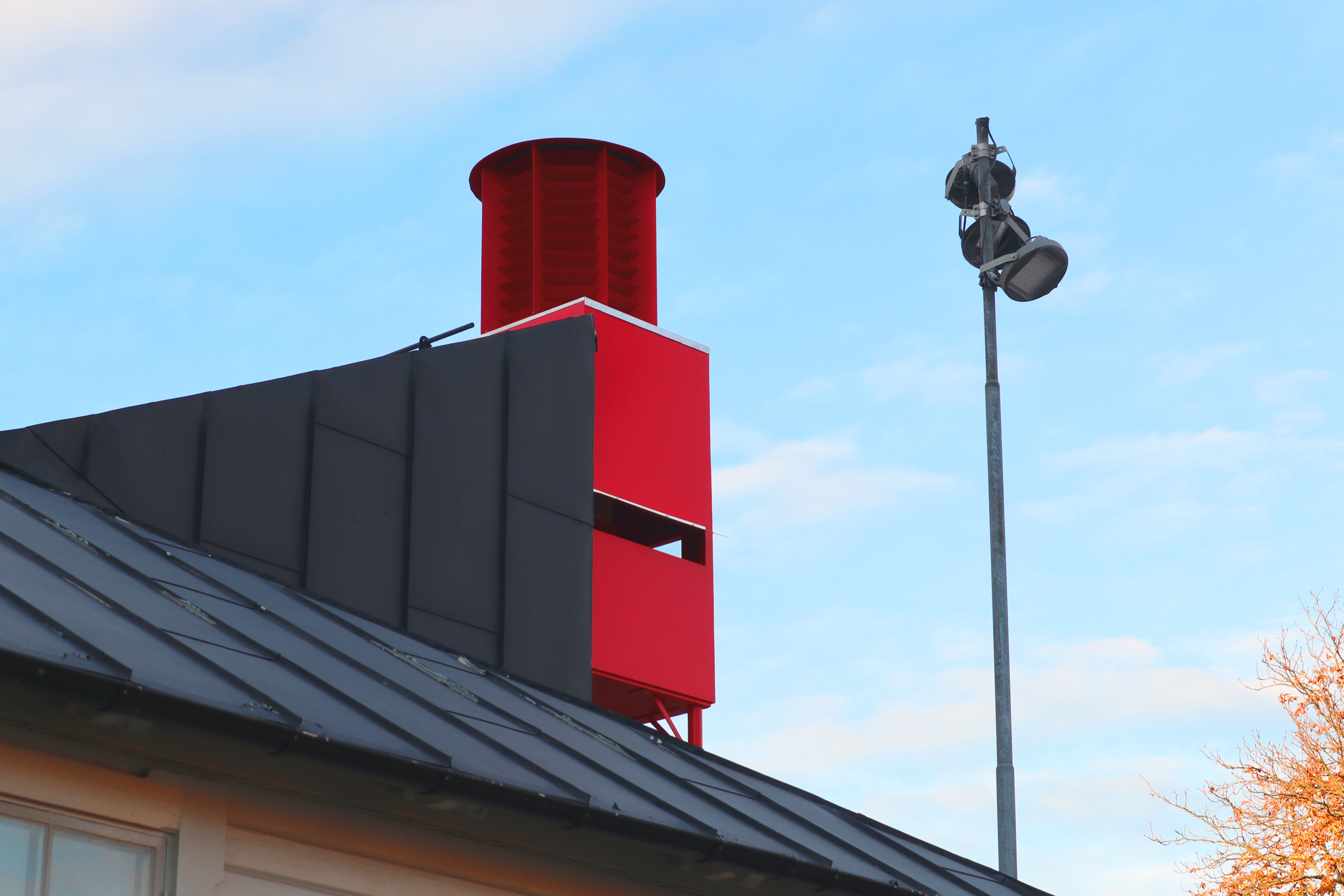
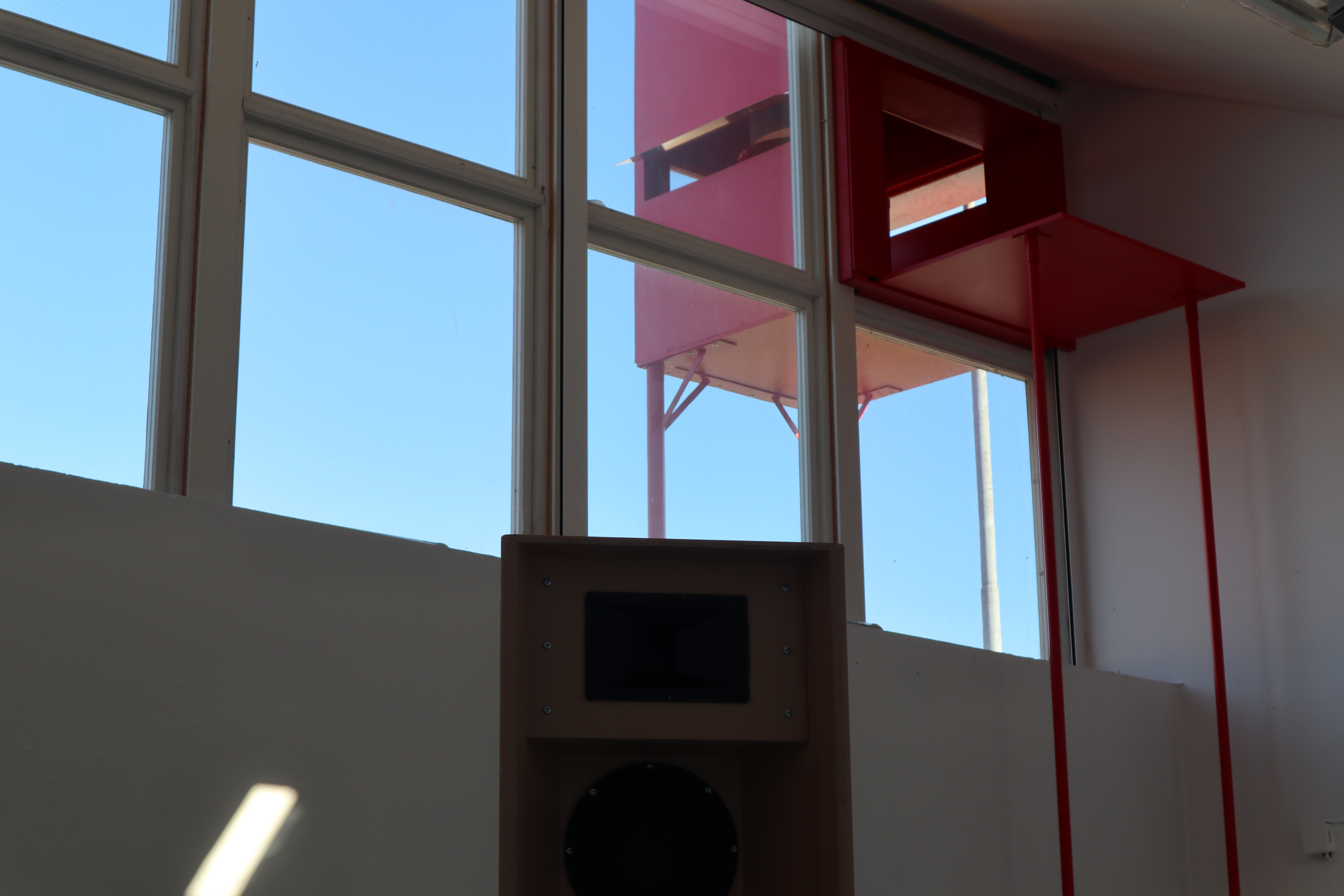
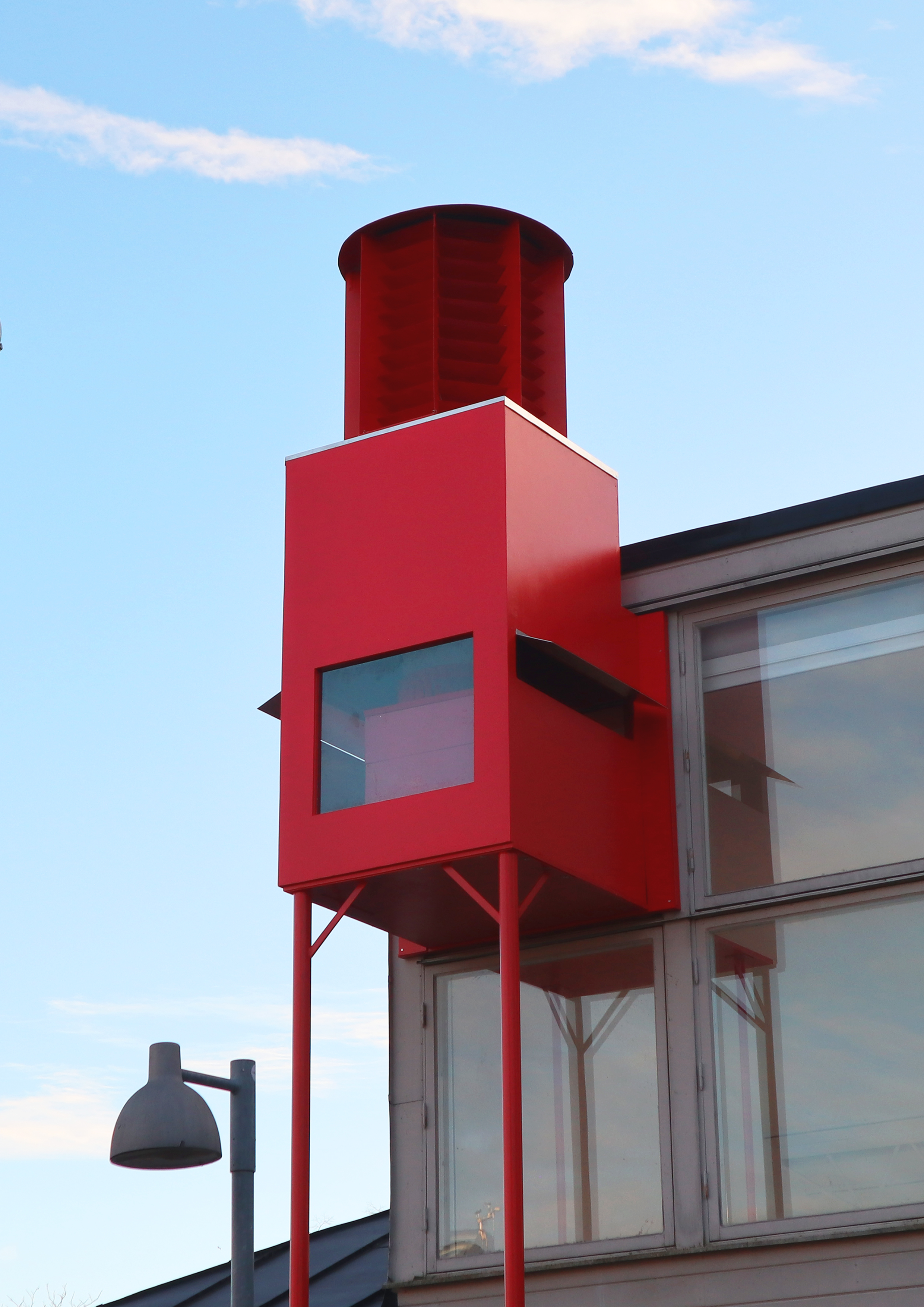
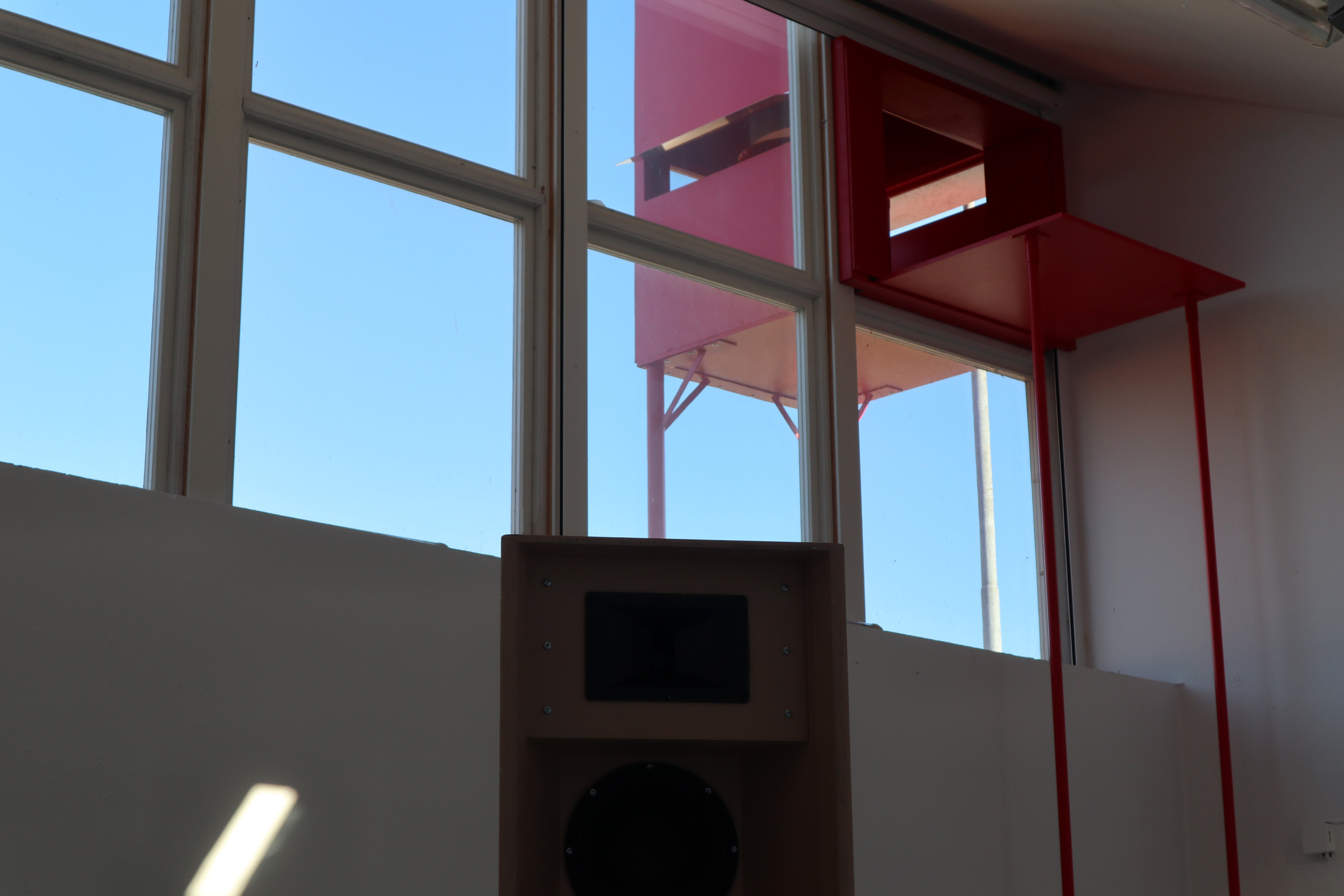
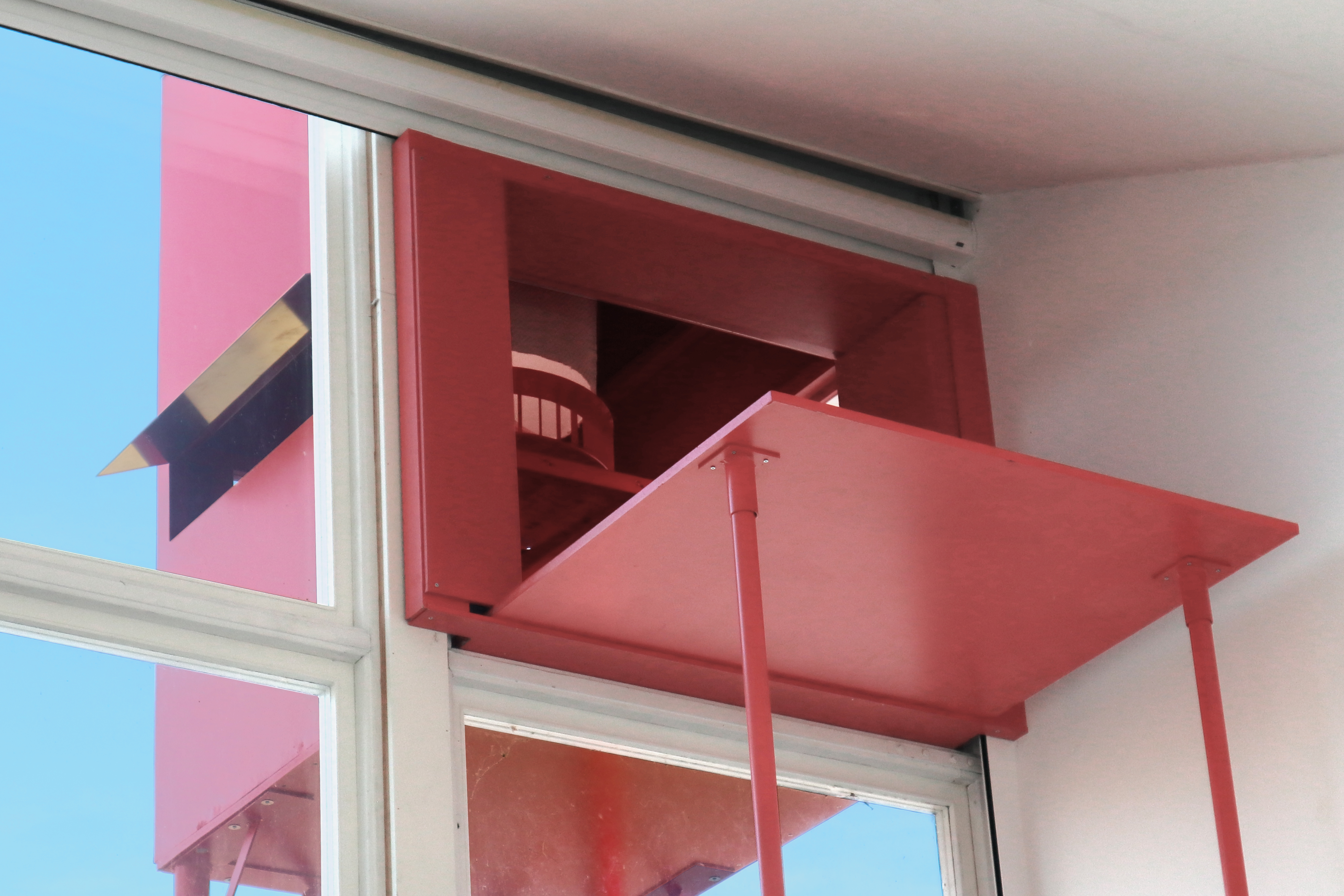
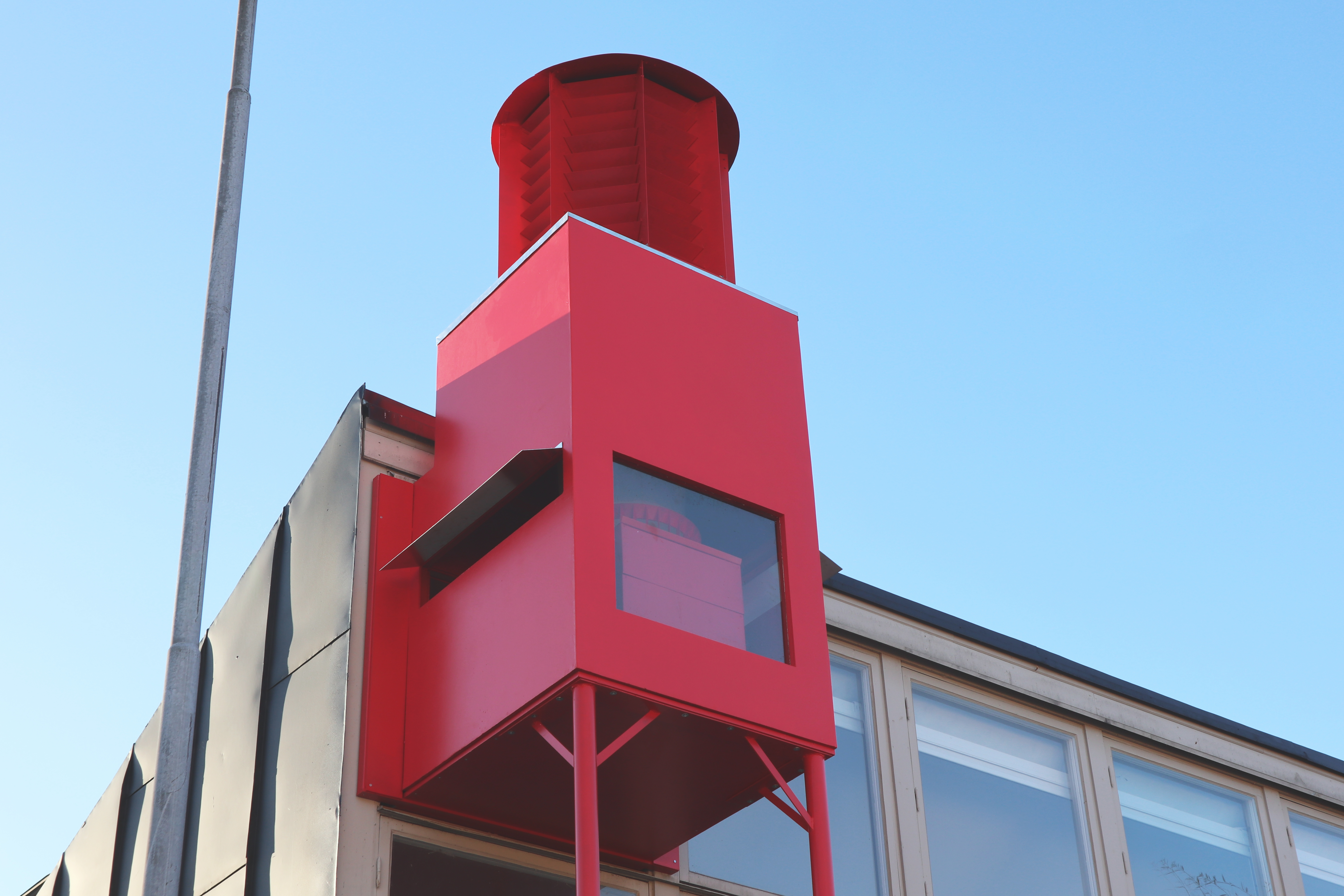
‘Turbine’ is
a work that harnesses the power of the wind to produce electricity to charge a
battery. It uses an octagonal omnidirectional wind capture device based on a design from the
18th century that allows wind to be captured in urban environments (where wind
direction is not constant). This work came from a desire to be able to produce
electricity as a means to question the monopoly of the production of
electricity held by large energy companies and the state.
As I mentioned in the introduction, this work
came from a desire to be able to produce electricity as a means to question the
monopoly of the production of electricity held by energy companies and
the state.
I was interested in how to solve big problems, like that of climate change, and
how, when the problem is individualised (e.g. it’s each person’s individual responsibility
to recycle and ‘do there bit’), then nothing ever changes, because the problem
facing society cannot be reduced down to the actions of individuals. You are weak when you are doing your recycling all by yourself, yes it’s a good thing to do, but you doing it won’t stop Exxonmobil or DuPont destroying the planet. Individualized action is weak, to challange real power you need to wield power, collectively with others and force change. This way
of rationalising the world is very indicative of now, and might be part of the
reason we, as individual members of society, feel so powerless to change
anything.
It’s put well here by the BBC filmmaker Adam Curtis:
“If you do live in a world
where you just follow your own desires, then when things go well it’s really
wonderful […] but when things go wrong it’s really scary, it’s like being in
the woods on your own, it’s frightening. You’re not with your friends in the
woods because that’s exciting, you’re on your own […] and that’s disempowering
[…] there
must be something inside you, that’s making you feel bad […] what’s stopping us
imagining a better world and a better future is this idea, that somehow the
reason we feel bad is because there’s something bad inside us, and that’s so
disempowering. And to be honest, well it may be true in a number of cases, it’s
also possibly true that the reason you feel bad is because you live in a shitty
society.”[1]
[1] A. Curtis, O. Dugmore
‘Adam Curtis on the fall of the Soviet Union's worrying parallels with modern
Britain’ Politics Joe, published 19
Oct. 2022, 22:00
So maybe if we want to empower
people to tackle big problems, like climate change, we need to be able to come
together in groups, or communities with shared interests, and in doing so we
could actually bring about change. One thing that unites modern society is our collective
need for electrical power. There are many examples of community electric
generation projects. Localised, resident-led initiatives
that develop renewable energy (solar, wind, hydro) to provide cheaper power,
reduce carbon footprints, and keep the benefits of energy production within the
community where they operate.
“Many advocates of solar energy have argued
that technologies of that variety are more compatible with a
democratic, egalitarian society than energy systems based on
coal, oil, and nuclear power; at the same time they do not maintain that anything about solar energy requires democracy. Their
case is, briefly, that solar energy is decentralizing in both a technical and political sense: technically speaking, it is vastly more
reasonable to build solar systems in a disaggregated, widely distributed manner than in large-scale centralized plants; politically
speaking, solar energy accommodates the attempts of individuals and local communities to manage their affairs effectively because they are dealing with systems that are more accessible,comprehellsible, and controllable than huge centralized sources. In this view solar energy is desirable not only for its economic
and environmental benefits, but also for the salutary institutions
it is likely to permit in other areas of public life.”
“the social consequences of building
renewable energy systems will surely depend on the specific
configurations of both hardware and the social institutions created to bring that energy to us.”
I had this idea of making a work that could produce electricity, that could
‘clip-on’ to an existing architectural structure. Architecture literally
shapes our existence, it’s something from the past that permeates the present.
It’s so weighted. In urban life, you are constantly confronted by the past–
like in London, sometimes it feels like it’s a complete mess, but if you know how to read it, it becomes really interesting. It’s something physical, and human-made, from the past that is shaping our present, that we can actually
see.
When I realized that I was going to exhibit at Galleri Mejan I became really
excited by the architecture of the space. The windows are these amazing double
square line. I like the idea that art can function in an exhibition space, but
also with it. I wanted to use them somehow. At the time I’d been really
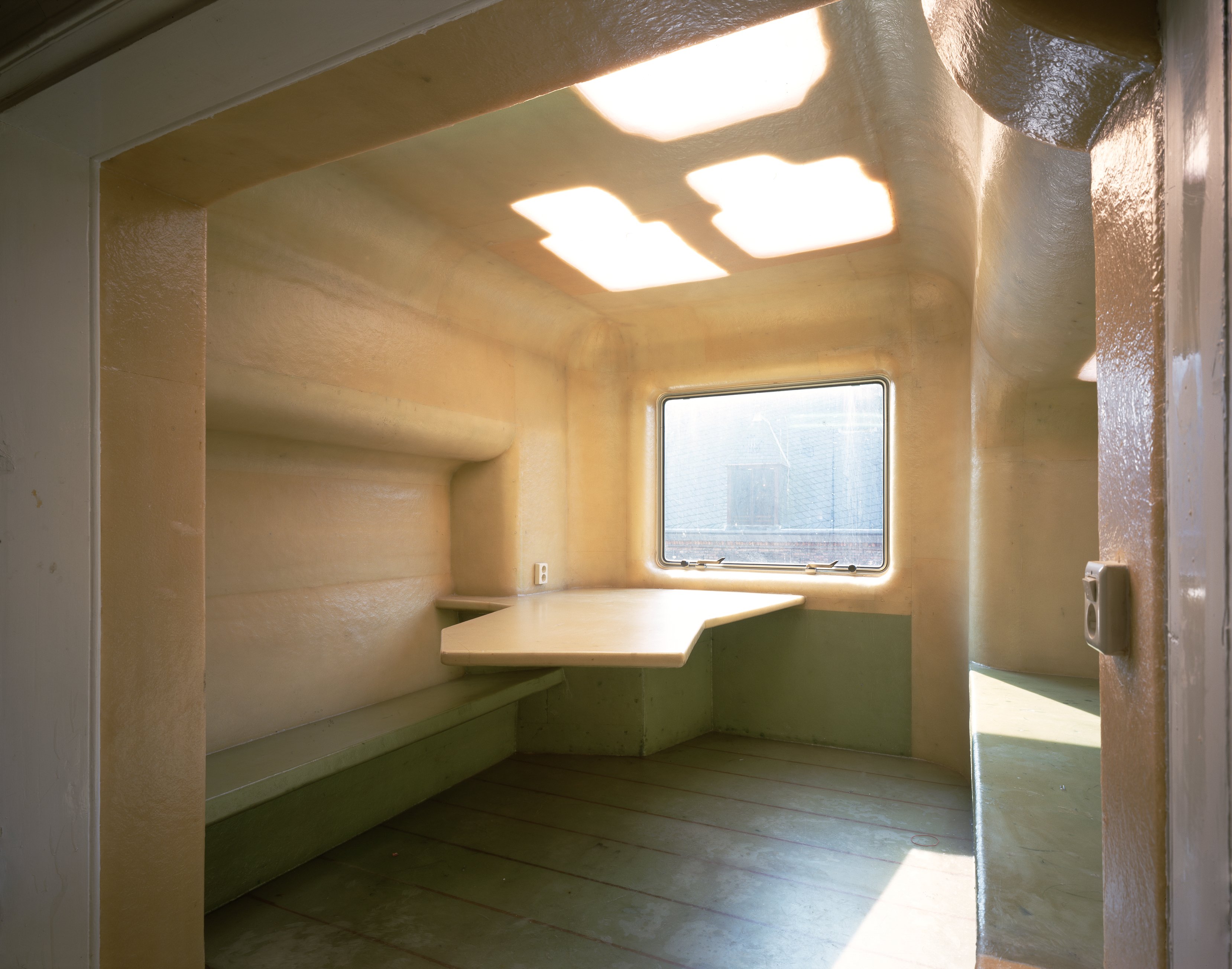
into Atelier Van Lieshout and their modular works. Here are some images of the
1997 work ‘Clip-On’ at the Centraal
Museum in Utrecht.
Atelier Van Lieshout’s work like this is really post-modern, to work with the space, to engage with it, and
have sculpture become a modular part of it. It made me think, if a house could
have a modular extension that functioned to produce electricity what would it
look like? And maybe more importantly, how would it affect how it functions? I
guess if the gallery had been located near a river I’d have construct
a water wheel, but what I had to work with was these fantastically large
windows, and the wind outside.
It uses an octagonal omnidirectional wind capture device based on a design by
Erasmus Darwin from the 18th century that allows wind to be captured in urban
environments (where wind direction is not constant).
Erasmus Darwin Drawing
I got turned onto this idea by Robert Murray-Smith, a battery developer
turned YouTuber. He made some great videos but sadly passed away recently. He
was a great guy and will be missed. This is a link to a project he did on the
Darwin wind capture device:
Fecundity is basically the opposite to monopoly. Here’s the definition:
nounnoun: fecundity the ability to produce many new ideas. "the immense
fecundity of his imagination made a profound impact on European
literature"
Capitalism has a tendency towards monopoly, or uniformity, and that’s a bad
thing because it will inevitably lead to totalitarianism. Also, it’s really
quite boring. I want to live in a world with specificity and diversity. It’s
fun, and exciting, and possibly one of the things that gives us the greatest sense
of Being in the world. And that’s great to have. A feeling that you’re
living with and within the culture you collectively built with others.
It gives us a sense of collective community, and with it power through collective
agency.
I think we should strive to come together to bring about a fecundity of
solutions to these big problems like climate change. Elon Musk or Sam Altman
aren’t going to save us. What is going to save us is the ability to produce and
implement an abundance of new ideas – who knows, one of them might actually
work .
Murray Bookchin has a theory on how a society should foster this:
Consensus mutes dissonance […]
minorities and the right to form factions, and the right to dispute, and to
organize around issues in opposition from one point of view to another […] the
right to have this is the only way you can have a creative body politic because
it is invariably, or almost invariably, the fact that by dispute, by the
absence of consensus, by an attempt to cultivate minorities, and to let them
function freely as minorities in an organized way is the only way we can
produce a creative society. We have to be able to create, and to be able to
create we have to cultivate the minorities - that come out often with the most
advanced points of view.[1]